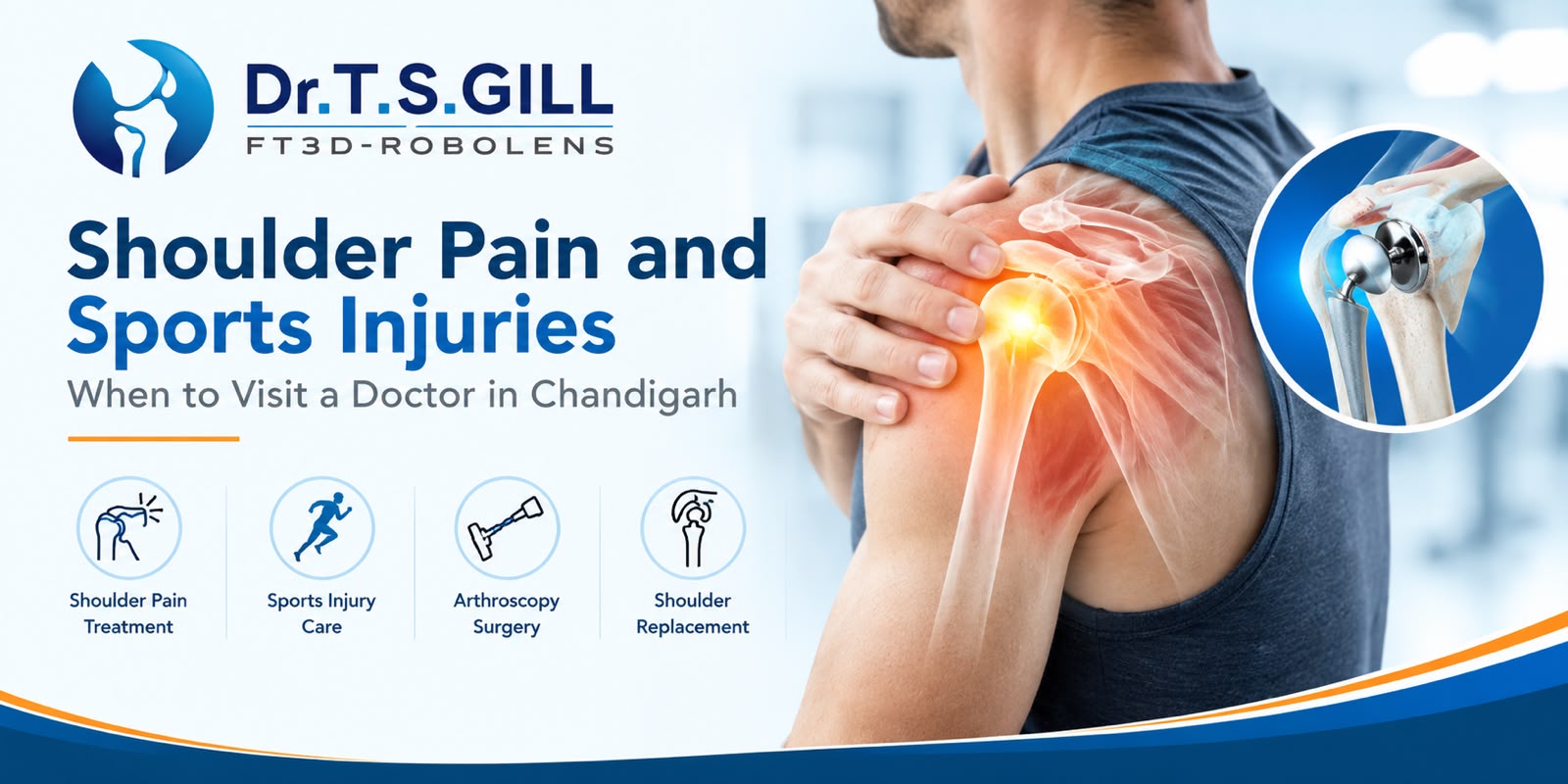
Shoulder pain can make everyday tasks surprisingly tough. When the shoulder joint or surrounding soft tissues are injured, it may become difficult to reach overhead, lift a bag, get dressed, or sleep comfortably. Even a seemingly minor injury may interfere with training for athletes and delay their return to sport.
Shoulder pain can result from a fall, sudden pulling movement, repetitive overhead activity or from gradual wear and tear. Although some cases respond to rest and appropriate exercises, persistent pain, weakness or restricted movement may be worthy of an orthopedic assessment.
If you are looking for a sports injury doctor Chandigarh, knowing what could be causing shoulder pain and when to seek help can help guide your next steps. In cases of advanced shoulder joint damage, shoulder replacement Mohali can be an option after a detailed clinical evaluation.
This guide will explain common shoulder injuries, treatment options, warning signs, and when specialist care may be appropriate.
What Brings on Shoulder Pain?
The shoulder is a very mobile joint and it is supported by muscles, tendons , ligaments and cartilage. It allows for a wide range of movement and therefore can be affected by a few types of injuries and joint conditions.
1. Injuries to the Rotator Cuff
The rotator cuff is a group of muscles and tendons that stabilize and move the shoulder. Repetitive overhead movements, lifting, falls or age-related changes can cause irritation or tendon tears.
Common symptoms include pain when lifting the arm, weakness, and discomfort when sleeping on the affected side. The treatment varies depending on the severity of the injury and may include activity modification, physiotherapy, medication prescribed by a clinician, or surgery in selected cases.
2. Dislocation of the shoulder
A shoulder dislocation occurs when the upper arm bone comes out of the socket of the shoulder joint. It can occur in contact sports, falls or accidents.
Dislocations can be very painful, make the shape of the shoulder look different and make it difficult to move the arm. Instead of trying to put the joint back into place yourself, seek urgent medical care. Associated fractures, nerve injuries or damage to blood vessels must also be considered.
3. Signs of Tendonitis and Shoulder Impingement
Repeated overhead movements irritate the tendons and tissues around the shoulder. Pain may develop gradually and be more noticeable with swimming, throwing, weight training, or overhead work.
A clinical examination can help differentiate tendon problems from other causes of shoulder pain. Treatment may involve activity modification, improved shoulder mechanics and an appropriate rehabilitation program.
4. Arthritis of the Shoulder
Shoulder arthritis is characterized by the damage or loss of cartilage in the joint. Symptoms may include persistent pain, stiffness, reduced movement and difficulty with everyday functions.
If arthritis progresses and non-surgical treatment no longer offers adequate relief, an orthopedic specialist may discuss replacing the shoulder joint.
When to See a Sports Injury Doctor in Chandigarh?
Not every episode of shoulder pain needs surgery but some symptoms should not be ignored. An evaluation can help figure out the cause and decrease the risk of going back to heavy activity too soon before the shoulder is ready.
If you experience, think about getting an orthopedic consultation:
- Persistent or recurrent shoulder pain.
- Weakness on arm lifting or rotation.
- Limited range of motion that affects daily activities.
- Disruptive pain in sleep, work, and exercise.
- Recurrent shoulder instability or a history of dislocation.
- Symptoms that fail to resolve with adequate rest and rehab.
- If your shoulder looks misshapen, you can’t move your arm, you have intense pain, or you suddenly can’t use your arm, seek immediate medical attention after a serious injury. Numbness, a cold or pale hand, or loss of sensation after an injury may suggest a more serious problem. If you have pain in your shoulder and you also feel pressure in your chest, shortness of breath or sweat, it may be a medical emergency.
A specialist in sports injury will be able to assess the injury, suggest appropriate investigations and let you know if it requires conservative treatment or an opinion from a surgeon.
How do you diagnose shoulder injuries?
An accurate diagnosis is important because many conditions can cause similar symptoms in the shoulder.
Medical History and Physical Exam
Your doctor may ask when the pain started, how the injury occurred, what movements worsen your symptoms and whether you play sports or engage in repetitive overhead activities.
The exam may test for tenderness, muscle strength, joint stability and range of motion. Certain tests can assist in determining any possible rotator cuff injuries, instability or other shoulder issues.
Radiology Tests
The tests needed would depend on what the suspected diagnosis is.
X-rays can help to identify fractures, joint alignment problems and signs of arthritis.
Your doctor may order MRI scans to examine the rotator cuff tendons, ligaments and other soft tissues.
Ultrasound may be useful in the evaluation of selected tendon injuries.
Not all patients need all investigations. Your doctor will decide which tests are appropriate based on examination and clinical findings.
What Is the Treatment for Shoulder Pain?
The treatment you receive will be based on the underlying problem, how severe it is and what your goals are. Many shoulder injuries can be treated without an operation at first.
• Non-Operative Treatment
Treatment may include temporary modification of painful activities, guided physiotherapy, and medication prescribed by a healthcare professional, depending on the diagnosis.
Rehabilitation may involve therapy to improve shoulder movement, strengthen supporting muscles, and restore coordination. Athletes should return to training gradually, on the advice of a professional, and not just because the pain has lessened.
Shoulder Arthroscopy Surgery
Arthroscopy is a minimally invasive procedure where a small camera and specialized instruments are inserted through small incisions. It can be used for some rotator cuff tears, recurrent instability and other conditions in the shoulder that require surgery.
Not all injuries need the procedure. How it is determined depends on the particular injury, how well you respond to non-surgical care, and the possible benefits and risks that you can expect.
Shoulder joint replacement
Shoulder replacement involves replacing damaged parts of the joint with artificial ones. It is a possible option for some selected patients with advanced shoulder arthritis, some complex fractures or other conditions causing substantial pain and functional limitation.
Usually, the decision is made after reviewing symptoms, imaging, overall health and past treatment. The recommended type of shoulder replacement depends on the condition.
If you are considering shoulder replacement Mohali, discuss with your orthopedic surgeon the benefits you can expect, the possible complications, the rehabilitation process, and whether there are any other treatment options that may be suitable.
An uncomplicated sports injury is not generally treated with a shoulder replacement. Joint damage or another specific condition makes replacement a viable choice is typically the recommendation.
Shoulder Treatment Recovery: What You Can Expect
The recovery depends on the injury and treatment. Mild tendon irritation may respond to a structured rehabilitation program, while tendon repair, stabilization surgery or shoulder replacement requires a more carefully managed recovery period.
Postoperative Recovery After Non-Surgical Treatment
Your doctor or physiotherapist may suggest doing exercises slowly to help you to move and to get stronger. Don’t keep testing painful movements or getting back to heavy training too quickly.
Recovery Following Shoulder Surgery
You may need to wear a sling for a period of time after surgery, depending on the procedure. The stages of physiotherapy usually follow a progression of protected movement when safe to do so, and then strengthening as healing permits.
The recovery after a shoulder replacement usually takes a few months. Driving, work, lifting and sports timing depends on the operation and individual progress.
Follow post-operative instructions, and attend scheduled reviews. Consult a health care professional if you develop a fever, wound drainage, increasing redness, or more severe pain. Call for emergency help if you develop sudden chest pain or trouble breathing.
Why opt for an Individualized Orthopedic Assessment?
There can be a number of causes for shoulder pain, and treatment should be based on the correct diagnosis, not just on the symptoms. A thorough evaluation will help determine if you need rehab, more imaging, arthroscopic treatment or consideration of joint replacement.
As per the official website of Dr. Tarandeep Singh Gill, he has an MS in Orthopedics and an MCh in Orthopedics and has been fellowship trained in arthroplasty and reconstructive surgery at St. Josef Hospital, Germany, and in arthroscopy and sports medicine at ARCUS Sportklinik, Germany.
He practices at Max Super Specialty Hospital, Mohali and the patients are mostly from Mohali, Chandigarh and nearby areas. The right specialist and plan of treatment will be based on individual condition of the patient so inquire about the relevant experience with your diagnosis during consultation.
Think about asking before choosing treatment:
- What is my shoulder pain?
- Is surgery needed for the condition to improve?
- Will I need an X-ray or MRI or other investigation?
- What are the benefits and downsides of the suggested treatment?
- When can I safely go back to work, exercise or sport?
FAQs
1. When to see a doctor about shoulder pain
If the pain continues, recurs, restricts movement, causes weakness, or interferes with sleep and daily activities, get it assessed. “If you have severe pain, or deformity or sudden weakness after an injury, you should get an urgent evaluation,” he says.
2. Can shoulder injuries from sports heal without surgery?
Yeah. Many mild injuries, and some tendon problems, respond to activity modification and physiotherapy. Surgery may be required to evaluate more severe tears, recurrent instability or some complex injuries.
3. Is surgery always required for rotator cuff tears?
No. Treatment is based on the size and type of tear, cause of injury, symptoms, functional limitations and response to rehabilitation. Some tears can be fixed without surgery, but others may need repair.
4. When do you need shoulder replacement?
Advanced arthritis or certain other conditions that cause substantial pain and loss of function, when appropriate non-surgical treatment is insufficient, may be reason to consider shoulder replacement. Suitability needs to be assessed by an orthopedic assessment.
5. Shoulder replacement recovery time
Recovery takes several months, and depends on the type of operation, general health and rehabilitation. Your surgeon will tell you when you can return to certain activities.
6. Is shoulder arthroscopy a substitute for shoulder replacement?
No. Arthroscopy uses a camera and small instruments to treat selected problems within or around the joint. A shoulder replacement replaces damaged surfaces of the joint with artificial parts. They’re for different conditions, different procedures.
NAP Details: Dr. Tarandeep Singh Gill
Doctor: Dr. T. S. Gill
Address: MAX SUPER SPECIALITY HOSPITAL
3RD FLOOR, NEW BLOCK B
PHASE 6, (SECTOR 56)
MOHALI, CHANDIGARH TRICITY
PUNJAB, INDIA
Phone: +91-82880 15106
+91- 62395 89197
Website: https://tsgillortho.com/
Instagram : https://www.instagram.com/drtarandeepsingh
Linkedin: https://www.linkedin.com/in/dr-tarandeep-singh-gill-b88746429/