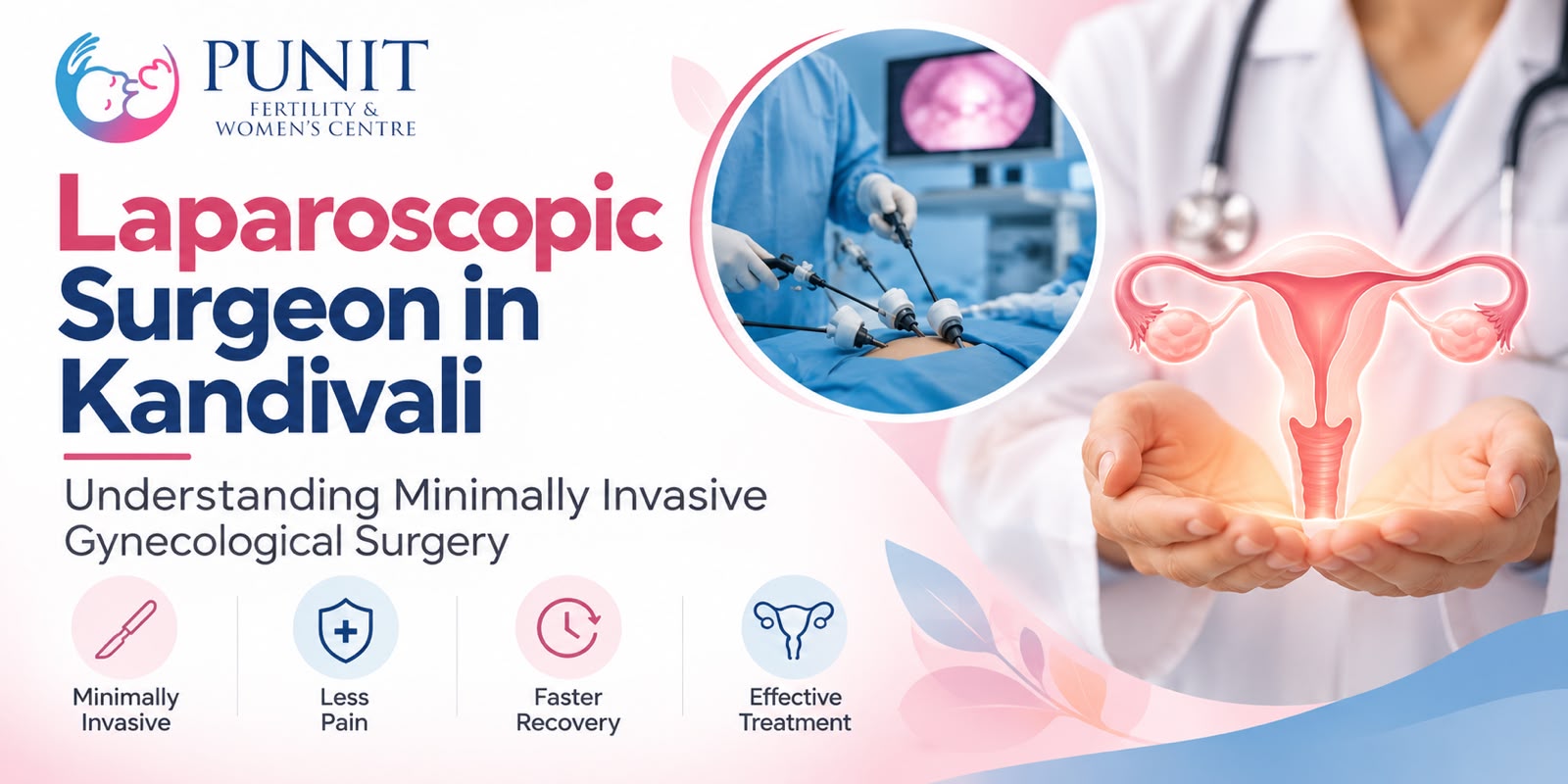
When a woman is diagnosed with a gynecological condition that requires surgery, it is completely natural to have many questions about the procedure, the length of the recovery, the potential risks, and the future of her reproductive health. Thankfully, with advancement in the field of medicine and surgery, many of the conditions that once required major surgery can now be treated with minimally invasive surgery. One of these techniques is laparoscopic surgery.
If you are looking for a laparoscopic surgeon in Kandivali, understanding the process of this surgery can help you prepare for your meeting and make an informed decision regarding your health care.
Punit Fertility & Women’s Center in Kandivali West, Mumbai, offers services in women’s health care that includes laparoscopic surgery. Women can make an appointment to learn about the available procedures and determine if they are a candidate for laparoscopic surgery for their condition.
What Is Laparoscopic Surgery?
Laparoscopic surgery is an advanced, minimally invasive surgical technique sometimes referred to as keyhole surgery. Instead of making one large incision, the surgeon makes several small incisions and inserts a laparoscope (camera) and other special tools to perform the surgery.
With laparoscopy, the surgeon is able to see the organs of interest on a screen while performing the surgery.
In the field of gynecology in kandivali , laparoscopy is used to investigate or treat selected gynecological conditions of the uterus, ovaries, fallopian tubes, and other pelvic organs. The consideration of this technique depends on the patient’s condition, the surgeon’s experience and judgement, and the medical history of the patient.
When are laparoscopic surgeries recommended?
Laparoscopic surgeries are an option when medications and other non-surgical therapies are not appropriate, and symptoms are not adequately controlled. Recommendations depend on a patient’s individual condition and preferences.
- Ovarian Cysts
There are many types of cysts that can develop on the ovary. Often, cysts will resolve on their own and do not require surgical intervention. Large or rapidly enlarging cysts, or cysts associated with a mass, may require surgical removal.
When surgery is indicated, it is often preferable to remove the cyst while sparing as much normal ovarian tissue as possible.
- Uterine Fibroids
Uterine fibroids are benign (non-cancerous) growths in and on the uterus. Symptoms associated with fibroids can include heavy and prolonged menstrual bleeding, pelvic pressure and pain, and can impact fertility.
For patients who wish to retain their fertility, a laparoscopic myomectomy may be an appropriate option to remove fibroids while keeping the uterus.
- Endometriosis
Endometriosis is when tissue that is similar to the lining of the uterus is found outside of the uterus. This can lead to pain during menstruation, chronic pain in the pelvis, painful intercourse, and can impact a woman’s ability to become pregnant.
Depending on the location and extent of the endometriosis, laparoscopic surgery may be helpful for the diagnosis and treatment of endometriosis. Surgery may be most appropriate if a patient has symptoms of endometriosis, does not wish to become pregnant in the future, and has not been adequately treated with medications.
- Selected Conditions Related to Female Fertility
There are other abnormal conditions in the pelvis such as adhesions and abnormalities of the fallopian tubes that may also require surgical evaluation.
Laparoscopy is not always necessary for people with infertility. A fertility specialist may suggest some initial tests and explain the advantages and disadvantages of laparoscopy before deciding on whether it is appropriate.
Hysterectomy for Selected Conditions
A hysterectomy is removal of the uterus. In certain cases, it can be done using the laparoscopic approach.
It may be considered for selected conditions when other options are ineffective, unsuitable or not desired after a detailed discussion. Hysterectomy permanently terminates the capacity to carry a pregnancy and, therefore, requires a detailed discussion on the implications of the procedure and other available alternatives.
Laparoscopic Surgery Has Numerous Benefits
Compared with the traditional open surgery, laparoscopic surgery may have several benefits for the right patient.
How to Carefully Visualize Internal Structures
The laparoscope is a thin, telescope-like instrument with a light source and a lens at the end. The laparoscope provides a lighted view of the operative field on a television monitor. The surgeon can operate through small incisions with the assistance of special instruments.
There are situations in which open surgery is safer, and/or more appropriate, than minimally invasive surgery.
How to Choose a Laparoscopic Surgeon in Kandivali
When choosing a surgeon, it is important to consider factors beyond online reviews.
When comparing potential surgeons, take into consideration the following:
Surgical Qualifications
You should ask what medical schools and surgical training the surgeon attended, what professional organisations the surgeon belongs to, what medical licences and registration the surgeon has, and what experience the surgeon has with the surgical procedure you are considering.
Surgeons who perform gynecologic procedures must have the surgical skills to perform different procedures.
Understanding of Options
Surgeons should be able to explain to you why each of your available options is being considered, the expected benefits and risks of the procedure, what the procedure involves, the expected outcome, and what alternatives to the procedure are available to you.
You should be allowed to ask questions, and give informed consent, prior to undergoing a procedure.
Evaluation of Your Case
The surgeon and the other members of the medical team should review your case, diagnoses, symptoms, medical history, allergies, medications, previous surgeries, and any tests that have been done.
This information helps the medical team plan the best course of action for your situation, including the procedure and the type of anesthesia that will be used.
Facilities and Follow-up Care
Find out where the procedure will be done, what kind of anesthesia will be used, what kind of postoperative care will be provided, and how your follow-up care will be organized.
A clear plan for pain management and expectations for wound care can alleviate anxiety before surgery.
Before Laparoscopic Surgery
Your surgeon needs to have your informed consent before proceeding with surgery. You will be given time to ask questions and your surgeon will answer them to your satisfaction.
You will be instructed to not eat or drink for a certain number of hours before your surgery, to take specific medications, or to stop taking others. These will be determined by the type of anesthesia and surgery you are having, your health status, and other factors.
During laparoscopic surgery, patients may feel shoulder tip pain because the CO2 that is used to inflate the abdominal cavity to create space to operate escapes into the abdominal wall.
After your procedure, your healthcare team will provide you with instructions on caring for your incisions, returning to your normal activities, and when to follow-up with your surgeon.
After Laparoscopic Surgery
Pain and fatigue are common after most surgeries and may persist for up to 6 weeks. Other post-operative symptoms include nausea, vomiting, and constipation, which can last for varying lengths of time.
Contact your health care team if you have symptoms that are not improving, are getting worse, or are of concern to you.
Post-surgical symptoms are expected and part of the normal recovery process.
Will Laparoscopic Surgery Affect My Ability to Get Pregnant?
Although laparoscopic surgery has very little effect on your ability to get pregnant, some women, understandably, have concerns about the effect of surgery on fertility.
How it impacts fertility varies based on the specific condition and the type of surgery. Some surgeries can help preserve fertility or address conditions related to fertility. Others can impact ovarian function, the fallopian tubes, or a woman’s ability to have a baby.
Before having surgery, it is recommended to discuss your pregnancy plans with your gynecologist or fertility specialist. You should ask if the surgery will improve your symptoms and whether it will help preserve your fertility or change the treatment options you may have in the future.
It should be taken into consideration that a surgery to improve your fertility may not lead to a pregnancy. Therefore, the risks of the surgery should always be weighed against the potential benefits.
Laparoscopic Surgery at Punit Fertility in Kandivali
Patients who require laparoscopic surgery in Kandivali can check the website of Punit Fertility & Women’s Center for more information.
The center’s website includes information about laparoscopy, other women’s health services, including fertility treatments and ultrasound, as well as hysteroscopy.
If you have been diagnosed with a fibroid or ovarian cyst, or are experiencing pelvic pain, you can set up an appointment for a consultation to review your diagnosis and available treatment options.
During your appointment, feel free to ask what treatment options are available to you, what a laparoscopic surgery would involve, if there are other treatment options available to you, and what recovery would be like.
Frequently Asked Questions
- What is laparoscopic surgery in gynecology?
Laparoscopic surgery is a type of minimally invasive surgery that is performed to diagnose or treat conditions of the female reproductive organs.
- Which gynecological conditions can be treated with laparoscopy?
Laparoscopy can be used to treat or diagnose conditions such as ovarian cysts, fibroids, endometriosis, adhesions and hysterectomy. Not all conditions require surgical intervention and need to be assessed individually.
- Is laparoscopic surgery better than open surgery?
Laparoscopic surgery usually results in smaller incisions, less post-operative discomfort, and a quicker recovery time than open surgery. The best approach for a given condition and the patient’s health and complexity are assessed to determine the safest method of surgery.
- How long is the recovery from laparoscopic surgery?
Recovery time depends on the procedure and the patient. Some patients are able to resume normal activities in a few days while more complex procedures can take several weeks to fully recover from. Always follow your surgeon’s instructions and do not rely on general time frames for recovery.
- Can laparoscopic surgery influence my ability to conceive?
This depends on the condition being treated and what type of surgery is performed. Some procedures can maintain or improve fertility. Others can potentially impact fertility and/or reproductive function. Let your surgeon know if you are planning on becoming pregnant in the future.
- How do I find the right laparoscopic surgeon in Kandivali?
In addition to the surgeon’s qualifications and registration, consider their experience, the facilities at the hospital they work at, how they communicate with you, follow-up care, and the potential risks, benefits, and alternatives to the procedure.
NAP INFORMATION
Name: Punit Fertility & Women’s Centre
Address: Office Number 2, 1st Floor, Burhani Heritage CHS LTD.M.G ROAD Kandivali (West) Mumbai
Phone: +91 99205 06659
Email: punitfertility@gmail.com
Website: https://punitfertility.com/