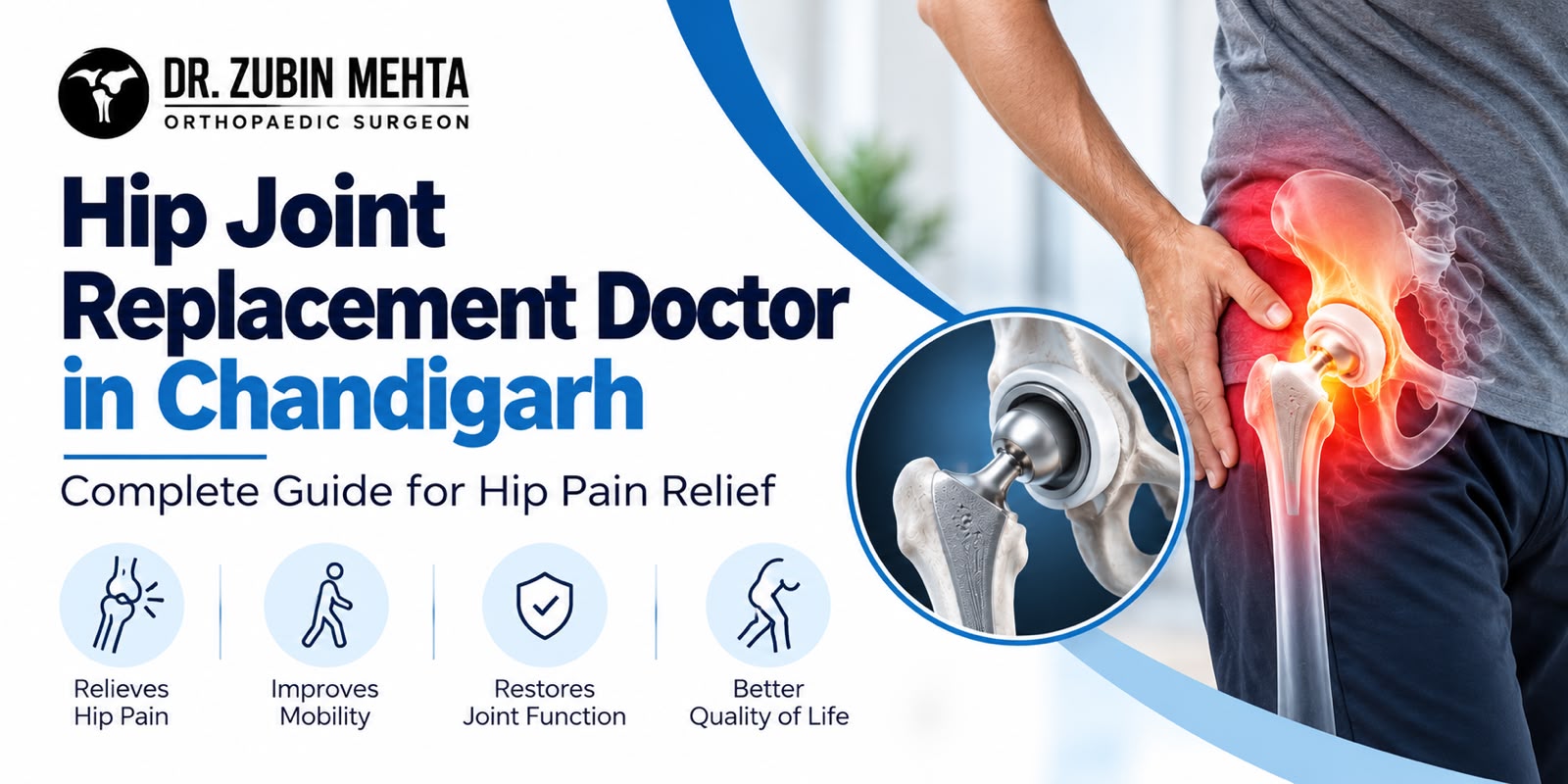
Hip pain can make simple activities like walking or climbing stairs difficult and can also make sitting or sleeping uncomfortable. Sometimes, temporary discomfort in the hips can be relieved by rest. However, if there is hip pain with stiffness and discomfort that does not go away by rest, then it may be an indication of a problem in the joints that require medical attention. Hip joint problems and pain can reduce mobility and affect quality of life. Understanding the reason for hip joint pain and having it treated can help in improving mobility.
If you are looking for a ‘Hip Joint Replacement Doctor in Chandigarh’, it is important to have an understanding of available treatment options, when surgery will be needed and how to choose the right orthopaedic surgeon. Having an appropriate diagnosis and individualized treatment plan can help an individual make the best choice for his/her hip health.
Dr. Zubin Mehta is an orthopaedic surgeon with specialization in hip and knee replacement surgeries. For more information about Dr. Mehta and his orthopaedic services, visit drzubinortho.com.
What Other Conditions Cause Hip Joint Pain?
Hip joint pain can be caused by many conditions that affect the tissues surrounding the joint. Sometimes, hip joint conditions develop from problems in other joints and vice versa. Conditions that can affect the hips include:
- Bursitis: It occurs when the bursae (fluid-filled sacs) become inflamed due to repeated hip movements. It leads to pain in the front of the hip.
- Fracture: Hip fractures can occur if the upper femur (thigh bone) is weakened and breaks. They can also occur after an injury or fall.
- Tendinitis: It occurs when the hip tendons get inflamed due to repeated movements and causes pain in the side of the hip.
- Avascular necrosis: This occurs when part of the bone dies due to a decrease in blood supply. This is normally seen in the femoral head. Early diagnosis of this condition is necessary to determine the extent of bone damage as well as the available treatment options.
- Hip Fractures and Injuries: Falls or injuries can affect the surrounding bone of the hip joint and may require immediate medical help.
- Inflammatory Arthritis: Some inflammatory conditions can affect the hip joint, and may cause pain, stiffness and inflammation.
- Muscle and Tendon Problems: Pain around the hip can be caused by conditions affecting the surrounding muscles, tendons and other soft tissues.
A hip joint replacement doctor in Chandigarh can be consulted if your hip symptoms do not improve with time or with treatment.
When Should You Consult a Hip Joint Replacement Doctor in Chandigarh?
Hip pains improve over time and may not always require an operation, however, chronic symptoms may be cause for concern especially if your daily activities are affected.
You should consult a doctor if you have:
- chronic pain in the hip, groin or upper thigh that does not improve with rest or time.
- loss of motion of the hip joint that limits your ability to move the leg.
- pain while walking, climbing stairs or standing for long periods of time.
- pain that interferes with sleep.
- pain that limits your ability to do routine activities despite using medications and physiotherapy.
Not all cases of these symptoms require hip replacement surgery. In some cases, certain treatments may give you relief from your symptoms.
In case of high fever, swollen joint with severe pain and inability to bear weight, an urgent/emergency consultation is necessary.
Treatment for hip pain at Chandigarh: Available Treatment Options
Depends on the underlying disease process and the extent of the condition (severity). Also depends on the age of the patient, the patient’s health status, the impact of the condition on the patient’s quality of life, and the presence of additional conditions.
1.Medication and Activity Modification:
Depending on the cause of pain, your doctor may prescribe you some pain-relieving medicines and instruct you to modify your activities in order to lessen pain. It is essential that you avoid activities that cause too much stress on the affected joints. This can help in reducing your pain.
Use of medicines should be decided very carefully, depending on the patient’s health status, other conditions that the patient has, for example, kidney problems, cardiovascular conditions, and/or peptic ulcer disease.
2.Physiotherapy, and Exercise:
In order to help you improve your muscle strength and joint mobility, your doctor may also advise you to do some physical exercises. Some patients may also benefit by doing some exercises in order to improve their balance. Your doctor may also prescribe you some specific exercises to help you maintain the ability to perform your day-to-day activities.
Such exercises need to be specific for the condition of the patient. Activities and exercises that worsen your symptoms should not be performed, and your doctor should always be consulted before you start a new exercise program.
3. Walking aids, and Lifestyle Changes:
Some patients benefit from walking with a walking stick. Such aids help in minimizing the stress on the affected hip joint.
In addition to treatments, maintaining a healthy weight and adhering to activity recommendations may help to manage symptoms associated with your diagnosis. Modifying daily activities may also be of benefit.
An orthopaedic consultation can assist in determining whether further conservative treatment or surgery is warranted.
What Is A Total Hip Replacement?
Total hip replacement (arthroplasty) is the surgical removal of the damaged hip joint and replacing it with an artificial hip joint. The goal of total hip replacement is to reduce pain and improve joint function in patients for whom this procedure is appropriate.
Hip replacement may be considered when:
- Osteoarthritis has caused persistent pain.
- There is significant limitation of hip joint movement.
- Regular, normal daily activities have become very difficult.
- Pain has not been relieved by physical therapy, anti-inflammatory medicines, or other non-surgical treatment.
Hip replacement is not always required for all patients with hip pain. The decision should be made after the symptoms are evaluated, a clinical exam is performed, and x-rays are taken. The evaluation should be conducted by the patient and surgeon.
Being aware of the surgeon you choose is a crucial aspect of your treatment journey. As you research hip joint replacement doctor in Chandigarh, consider the following.
Relevant qualifications: The surgeon’s medical qualifications and specialist training are important. So, too, is the surgeon’s experience with hip replacement.
Personalized treatment planning: At your consultation, your diagnosis and treatment options should be explained. Possible complications of treatment and the expected benefits should also be discussed. Your recovery should also be covered.
Clear communication: You should be at ease to ask questions concerning your treatment, the hospital stay, the costs, the rehabilitation, and the choices of implants.
Follow-up and rehabilitation: You should know the plan for your rehabilitation which should include physiotherapy and outpatient support for mobility and your return to normal activities.
Dr. Zubin Mehta’s practice is in the same region (Zirakpur/Mohali) and offers consults and orthopedic services including joint replacements (of the hip and knee).
If you have questions about the practice, services offered, and available consults visit Dr. Zubin Mehta’s website.
Recovery After Hip Replacement Surgery
The length of time it takes to recover from hip replacement surgery varies. It can depend on things like your general health, the condition being treated, the type of surgery, and how well you participate in your rehabilitation.
After surgery, your healthcare team will probably recommend things like:
- -Walking with assistance.
- -Doing the exercises you’ve been given to improve your strength and range of motion.
- -Taking your medication as prescribed.
- -Taking care of your incision and going to your follow-up appointments.
- -Returning to your normal activities as directed.
In the first several weeks to months, many people see improvements in their condition, but some conditions take longer to fully recover from.
Some risks of hip replacement surgery include infection, blood clots, dislocation, and continued pain. Your doctor can tell you more about the risks related to you personally and the precautions you can take during your recovery..
Conclusion
Long term hip pain affects your movement and independence and impacts the overall quality of your life. Finding the cause of the pain and taking the right treatment for it is a step towards improving the health of your joints and your lifestyle.
You should consider meeting an Orthopedic Surgeon for an opinion if you are looking for a Hip Joint Replacement Surgeon in Chandigarh or Hip Pain Treatment in Chandigarh.
NAP Details
Name: Dr. Zubin Mehta – Hip & Knee Replacement Specialist
Location: Fortis Hospital, Sector 62, Mohali — Punjab 160062
Phone: +91 79735 06344
Website: https://drzubinortho.com/
Google Business Profile : https://share.google/Km2ncaUPnPWXFgNpl