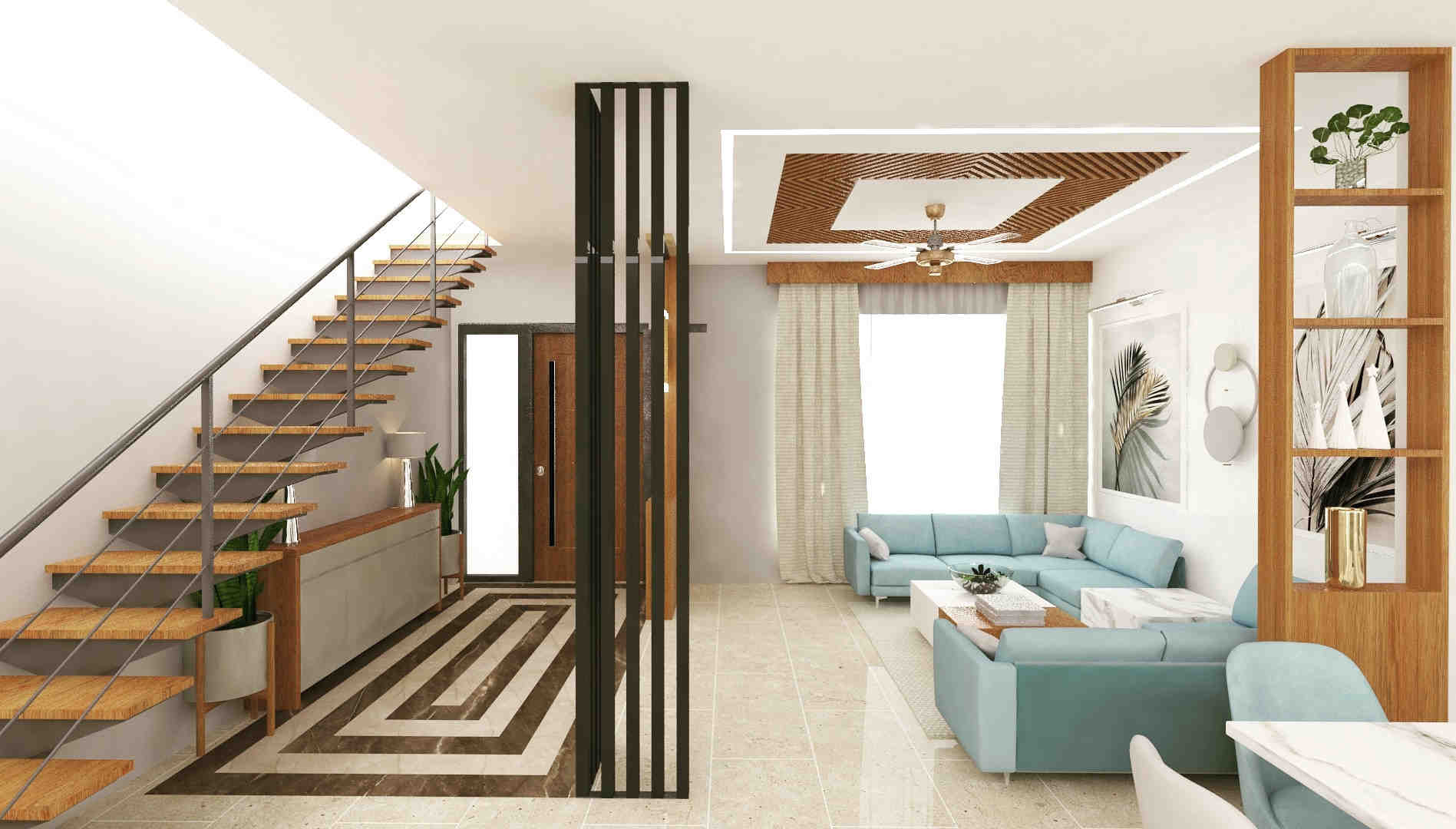
Someone we know spent six months renovating a 3 BHK in Sector 44. The interior designer they hired delivered a modular kitchen in the wrong finish, a false ceiling that started cracking at the edges in month three, and a wardobe that couldn’t close properly because the hinges were undersized for the door weight. The whole thing cost ₹14 lakh. It’s not an unusual story. The interior design market in Chandigarh has good designers and several who shouldn’t be charging what they charge.
Here’s how to find the right one.
What the Market Looks Like Right Now
Chandigarh has a tiered designer market. At the top are the national platforms — Livspace and Design Cafe — with fixed pricing, manufacturer-direct procurement, and a structured project process. Below that are established local firms with 10–20 years of portfolio work. Below that are newer independents with strong Instagram aesthetics but limited execution track records. The pricing doesn’t always align with the tier, which is where buyers go wrong.
Livspace is genuinely useful for people who want predictability over creativity. You know the price before work starts. You get 3D visualization before a hammer touches anything. The execution is managed through their vendor network. The design itself is sometimes a bit formulaic — they have templates they adjust rather than designing from scratch. For modular kitchen and wardrobe work specifically, they’re reliable and the product quality is consistent.
Design Cafe does stronger original design work. The 3D visualization process is thorough — you’ll see the space in detail before approving anything. They’re more expensive than Livspace and the customization ceiling is higher.
Local Firms Worth Knowing
Arch Interior Designers in Sector 22 has been around long enough to have designed interiors in the city’s upscale sectors when those sectors were still being developed. That kind of tenure matters — they’ve seen what lasts and what doesn’t, what the local material suppliers can actually deliver versus what looks good in a catalogue. Ask to see projects that are three or four years old, not just the recent portfolio. How does the work hold up?
Vaastu Interiors in Mohali handles the vastu compliance requirement that many families in the tricity want addressed alongside the design work. For buyers who take this seriously, having a designer who integrates it from the start rather than retrofitting it is worth the specific search.
What Things Actually Cost
Modular kitchen: ₹1.5 lakh to ₹5 lakh. The range is real and driven largely by the hardware — hinges, drawer channels, the soft-close mechanisms. Cheap hardware fails in two years. German hardware (Hettich, Blum, Häfele) adds 20–30% to the kitchen cost and lasts the life of the home. Don’t compromise here.
Master bedroom with full wardrobe: ₹80,000–₹2.5 lakh. Living room treatment (false ceiling, feature wall, lighting): ₹50,000–₹2 lakh. Full 2 BHK interior: ₹5 lakh to ₹20 lakh. Office fit-outs: ₹800 to ₹2,500 per square foot depending on spec.
Before You Sign the Contract
The portfolio is the starting point, not the ending point. Visit a completed project if the designer will allow it — most serious designers can arrange this. Speak to the client if possible. How were the timelines managed? How were problems handled when they came up? What’s the snag resolution process?
Get a phased payment structure tied to project milestones, not calendar dates. Milestone payments protect you. Calendar-date payments protect the designer. Clarify exactly what’s included — design fees, execution, materials, labour, finishing — and what isn’t. The gap between expectation and written contract is where most renovation horror stories start.
A good designer saves you money in the long run by specifying things correctly the first time. Finding one worth trusting is worth the extra effort at the selection stage.