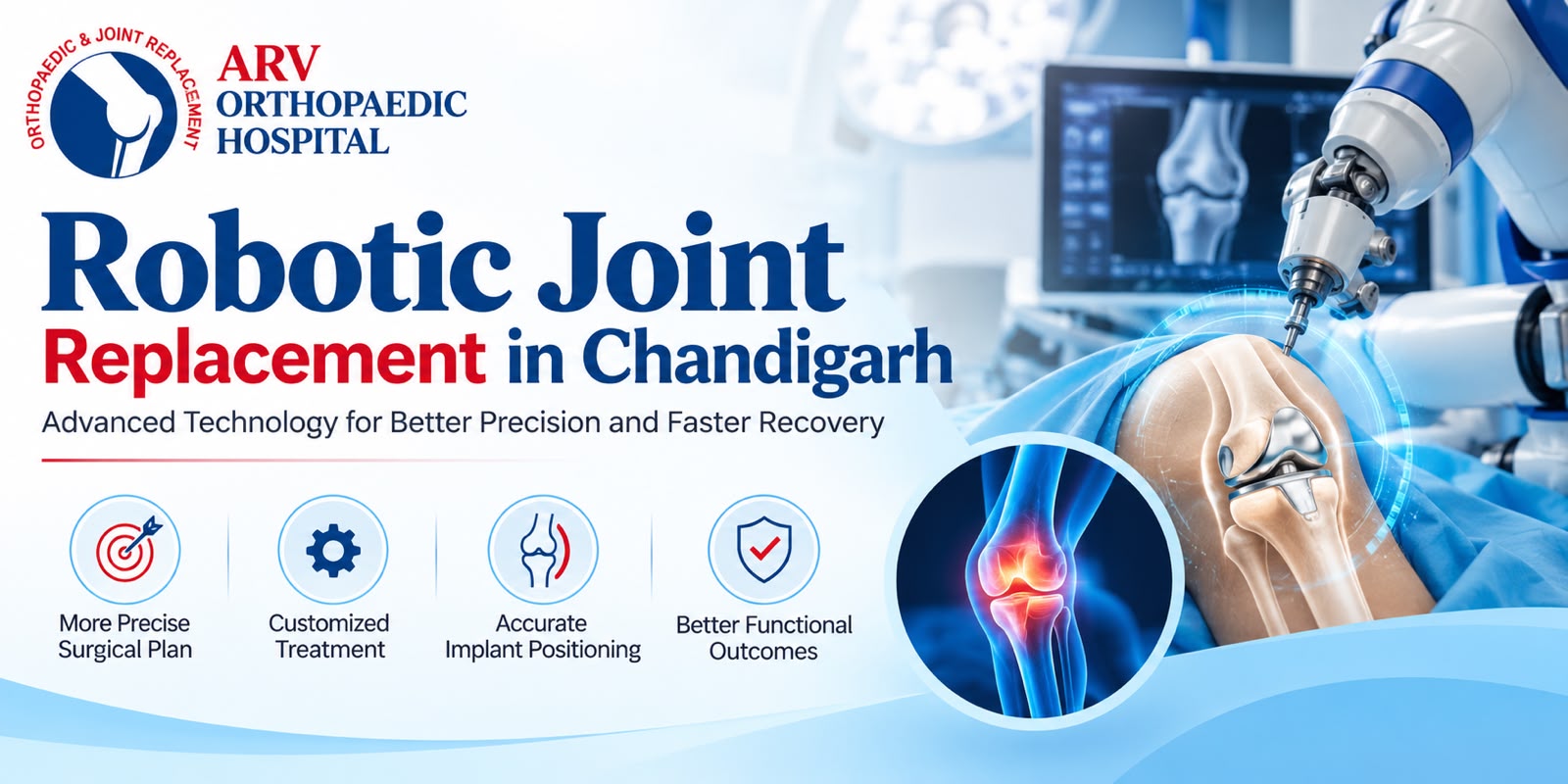
Robotic joint replacement is an innovative way of doing joint replacements where in robotic arms and computers are used to assist the surgeon to gain better control and precision in performing the surgery. Robotic systems enable orthopedic surgeons to plan, and perform joint replacements with greater accuracy. It is an important advancement in the field of surgery as it leads to more consistent and better functional outcomes. Robotic joint replacements in chandigarh allow for the future potential of using computer integration for joint replacements.
Benefits of Robotic Joint Replacement
- The surgeon gets a 3D view of the patients joints and anatomy thus, improving surgical plan
- The robotic arm gives better stability than a human hand.
- 3D imaging and virtual models help surgeons plan better
- Better intraoperative control
- Consistent and better outcomes.
Procedure of Robotic Joint Replacement
The procedure is similar to a conventional joint replacement where in the diseased joint is replaced with a prosthetic joint. The difference being the robotic arm and computer integration help the surgeon to gain better control and position the joint components.
Who Needs Robotic Joint Replacement
Patients suffering from severe joint pain due to arthritis or damage of the joints, especially of the knees or the hips, may find relief after joint replacement surgery. Not all patients are eligible for robotic joint replacements. It depends on a number of factors and these must be evaluated case to case.
Recovery after Robotic Joint Replacement
There are certain protocols for recovery after joint replacements and these are widely followed. After recovery from anesthesia patients are encouraged to walk. However, the length of stay at the hospital may vary from case to case.
How to choose the right hospital?
Before undergoing such a procedure it is imperative to gain as much knowledge of the field as possible. The internet is a great place to start. Assessing the hospital, the surgery and the surgeon becomes of paramount importance.
Who May Need Robotic Joint Replacement Surgery?
Joint damage can cause joint pain, stiffness and restrict a person’s ability to carry out their daily activities. Joint replacement surgery is an option for a person with severe joint damage. Osteoarthritis is the main reason for knee and hip replacements. However, other conditions can cause damage to a joint.
It may be worthwhile for an individual to seek an orthopaedic opinion if they have the following:
- Persistent knee and/or hip pain that limits walking and interferes with their daily activities
- Stiffness in a joint that makes it difficult to straighten or bend the joint
- Difficulty in doing activities like standing and stair climbing
- Pain that does not go away despite appropriate treatment
Advanced arthritis that is evident through an examination by a doctor and tests like x-ray
Not every person with joint pain requires surgery. The decision on the type of surgery will be made after assessment by a orthopaedic specialist. The type of surgery may be a robotic, conventional joint replacement surgery or if the case is not severe, the specialist may suggest other treatments.
Understanding Robotic Total Knee Replacement in Chandigarh
Total knee replacement is required if the knee joint cartilage is damaged, and the knee bones start rubbing on each other causing knee pain, swelling and stiffness.
People with advanced knee osteoarthritis may be candidates for a knee replacement surgery. In total knee replacement, the surgeon removes damaged knee joint surfaces, and replaces them with artificial surfaces. There are several advantages of using the robotic system for knee replacement surgery over conventional systems.
To return to normal activity level is the main goal. Pain relief and improved mobility are added benefits.
Benefits of Robotic-Assisted Joint Replacement
What are the advantages of robotic-assisted surgery? The outcomes may vary. Some of the potential advantages of robotic-assisted surgery are listed below.
- More Precise Surgical Plan
Accurate plan of surgical procedure based on the specific anatomy of the patient’s joint is imperative for a successful outcome. Using robotic systems, surgeons can develop a more precise surgical plan based on the anatomy of the patient’s joint.
- Customized Treatment
An individual’s lifestyle, daily activities, level of function, and medical condition are important when considering the treatment and procedures to be offered. Using robotic-assisted surgery, surgeons can provide treatment based on the unique circumstances of the patient.
- Controlled Bone Preparation
The robotic system allows the surgeon to develop a plan for the procedure and guides the surgeon to perform within the boundaries of the plan.
- Support for Implant Positioning
It is important for a surgeon to position and align the implant accurately. Robotic assistance can help in performing the planned positioning of the implant.
- Support for Early Rehabilitation
Patients undergoing robotic total knee replacement in chandigarh may be able to stand and/or walk with support soon after the surgery. Early rehabilitation is important for complete recovery.
While robotic-assisted joint replacement may have the above advantages, many other factors affect the results. Recovering from a joint replacement surgery involves more than the technology. It also depends on the surgical technique, the implant, and the rehabilitation program.
How Is Robotic Knee Replacement Performed?
A detailed explanation of the procedure may help patients understand their condition better, and feel more prepared for their upcoming surgery.
Step 1: Initial Consultation
The orthopaedic surgeon will explore your symptoms, medical history, mobility and any treatment you may have received. A physical examination will allow the orthopaedic surgeon to assess how far the joint moves, how stable it is and where it is painful.
Step 2: Diagnostic Assessment and Planning
X-rays and additional tests are requested as needed to assess the level of joint damage. The orthopaedic surgeon integrates the available information to determine if a joint replacement is appropriate and if assistance of a robotic system is warranted.
Step 3: Surgery with Robotic Assistance
The procedure takes place in an operating room. The surgeon operates the robotic system to perform the planned surgical steps. The joint surfaces are replaced with the artificial surfaces of the appropriate components.
Step 4: Post Operative Care
Upon completion of the procedure the medical team assesses your condition, the status of your incision and how mobile you are. The team will communicate the surgeon’s recommendations as to when you may stand and/or walk.
Step 5: Physiotherapy and Rehabilitation
Various means are used to restore strength, flexibility, movement, balance and confidence. Patients are taken through progressive activities as tolerance improves.
Robotic systems have the potential to enhance implant positioning by increasing accuracy and consistency. However, this technology should not be automatically implemented for every case. A variety of different factors affect the overall outcome, and a surgeon’s experience still plays a critical role.
What is Recovery Like After Robotic Joint Replacement?
The type of joint replaced, the extent of the joint damage, and the individual’s general health, among other factors, will affect the overall recovery.
Immediately following Surgery
The medical team will monitor the patient’s overall condition and assess the joint for pain and swelling. Progressive movement of the joint is encouraged as directed by the surgical team and rehabilitation staff.
First Few Weeks
Continued work on movement of the joint and the surrounding muscles is the focus of rehabilitation.
Following Weeks and Months
Further improvement in joint function is expected, and the individual may return to normal activities and outings as directed and permitted by the medical staff.
Patients should seek medical attention if they experience concerning symptoms, such as a fever, increasing joint pain, swelling, and redness over the joint, or if they have difficulty breathing or chest pain.
How to Choose a Hospital for Robotic Joint Replacement in Chandigarh
When choosing a hospital, it is important to consider the experience of the orthopaedic surgeon and the overall suitability of the recommended procedure. Other important factors are the rehabilitation and post-operative care services offered by the hospital.
Consider the Following Before Deciding:
- How many joint replacements of this type does the surgeon perform?
- What robotic-assisted system do you use, and how does it help with the surgery?
- What benefits and limitations do you see in my case?
- What do you need to disclose to me regarding risks and complications?
- What does my treatment cost cover?
- What kind of physical therapy and aftercare will I receive?
- The orthopaedic team strives to help patients make informed decisions about their care.
- Why Choose ARV Orthopaedic Hospital for Joint Replacement?
ARV Orthopaedic Hospital, located in Sector 21C, Chandigarh, provides a variety of orthopaedic services including joint replacement and robotic knee replacement.
The hospital’s website lists Dr. Atul Malhotra as the chief orthopaedic surgeon and mentions their use of the VELYS robotic-assisted system for knee replacement.
Patients interested in robotic joint replacement are encouraged to review their case with the orthopaedic team to understand the symptoms, diagnostics, and treatment options and expected recovery. The assessment of the case should guide the decision regarding the treatment rather than relying on the technology.
Frequently Asked Questions
- What is robotic joint replacement in Chandigarh?
Robotic joint replacement in Chandigarh is a surgical technique where a robotic system is programmed to assist the orthopaedic surgeon to replace a joint of a patient with significant joint damage.
- Is robotic total knee replacement suitable for everyone?
No, it is based on the level of arthritis, symptoms, other medical conditions, the anatomy of the joint and previous operations. An orthopedic surgeon is the best person to answer this after performing a detailed examination.
- Is robotic knee replacement better than conventional surgery?
Improving the precision and consistency of implant position with the use of robotics is a definite advantage. However, similar outcomes in all patients is not possible with the use of robotics alone. It depends on the case and the surgeon’s skills and experience as well.
- How long does the recovery process take after robotic knee replacement?
This varies from patient to patient, but most are walking with support soon after surgery. Improvement in joint function continues for weeks to months after the surgery and is aided by physiotherapy.
- Is robotic joint replacement safe?
No procedure comes without risks and complications. The surgeon can best elaborate on the possible risks and complications and the benefits of the surgery in your case.
- What is the approximate cost of robotic total knee replacement in Chandigarh?
The procedure and implant used, the hospital stay, investigations, and rehabilitation all play a role in determining the cost. The best person to address this is the admitting hospital.
- Where should I go in Chandigarh for a consultation regarding robotic joint replacement?
For information about robotic joint replacement, and other orthopedic procedures, including knee replacement, you can contact ARV Orthopaedic Hospital in Sector 21C Chandigarh.
Contact ARV Hospital
ARV Orthopaedic Hospital
Address: #2125, Sarovar Path, Sector 21C, Chandigarh, 160022
Open: 24×7 hrs
Phone: 0172 400 5596, 271 1978, 8427452125
Email: dratulmalhotra.23@gmail.com
Connect With Us
Facebook:https://www.facebook.com/ARVHospital
YouTube: www.youtube.com/@arvorthopaedichospitalchan2953
Website : https://arvhospital.com/